Kristina Weiss
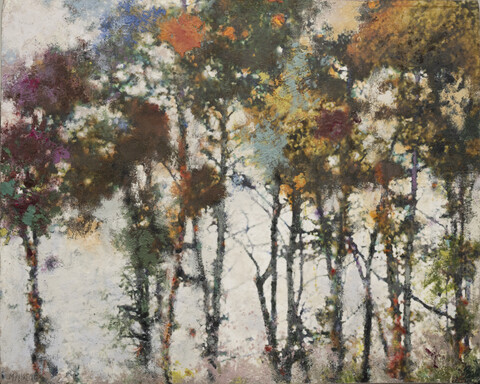
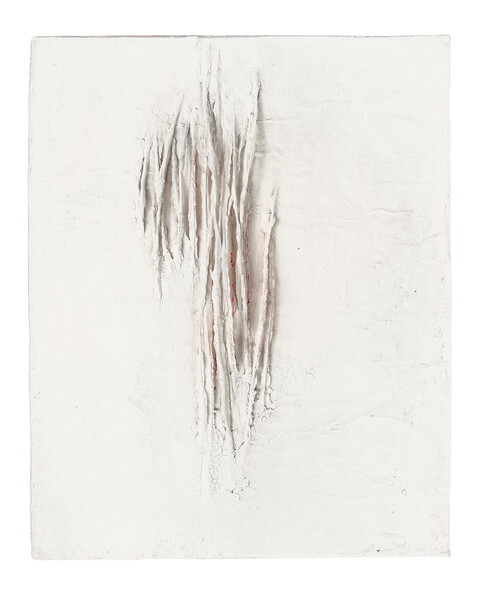
Kristina Weiss, a master of artistic multiplicity, moves between music, literature, and the visual arts. She experiments with oil paint and paper art, allowing controlled chance to create beauty out of chaos. Her style is defined by abstraction and the poetic unrealization of natural and acoustic phenomena. Weiss conveys the transience of moments, opens spaces for association, and invites viewers to make their own discoveries.
Kristina Weiss is not concerned with depicting scenes, objects, or people; her art is less than half-concrete and can only be truly accessed on an emotional level. The key lies in the fact that, to create something that appears simple and sensual at first glance, she employs many—and varied—materials: she works with paper and linen, with acrylics and pigments, and she also experiments with wax. With only very few exceptions, she works almost exclusively in black and white, reinforcing the impression of reduction—while the multilayered nature of her work ensures that viewers discover something new each time they look. As gallerist Werner Lauth, whose workspace has been surrounded by Weiss’s works since last week, affirms. — Nicole Sperk
Kristina Weiss was born in Berlin, where she also completed her artistic and academic studies.
Her early artistic interest lay in music and in understanding how it is “made,” while the visual arts—always present through an ancestor who worked professionally as a painter—initially did not extend beyond a solid technical level. This changed when she moved from drawing to painting and began to transfer compositional principles from music to visual art—at first playfully, then with increasing seriousness.
Ultimately, in her twenties, Kristina chose to pursue a path in the visual arts, not least because of the physical component inherent in painting, which pleasantly complements the intellectual aspect.
Nevertheless, her internal point of reference remains rooted in musical analysis and an aesthetic shaped by music. This movement between art forms—this ambivalence and the feeling of never fully belonging—is, in the end, a defining element of Kristina’s artistic identity.
More
Less